
The Objectification of Desire and the Dissolution of the Self
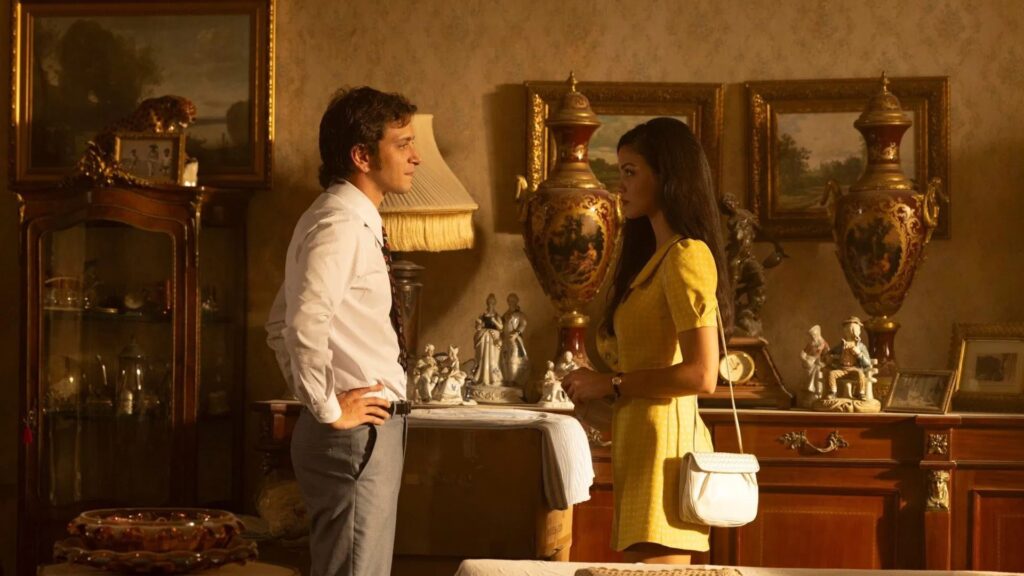
Adapted from Orhan Pamuk’s novel The Museum of Innocence, the series is not simply a visualization of a literary text. It can also be read as a space of rewriting, one in which the author reconstructs his own narrative universe and allows memory and desire to move through one another. Yet the story that emerges remains largely enclosed within Kemal’s inner world. Desire takes on the form of a closed aesthetic intensity revolving around a single self. Within that intensity lives both personal obsession and an invisible patriarchal gaze.
The story begins in a shop window. A handbag noticed by Sibel. A moment so small it might vanish into the ordinary rhythm of daily life. Yet it is precisely there that a delicate fracture opens, binding Kemal and Füsun to one another. What follows are the long encounters inside Merhamet Apartment, accompanied by the polished yet strangely hollow atmosphere of engagement. Still, this engagement is not a beginning. It is a rupture folding inward rather than moving toward resolution. Loss begins to grow quietly here, before it is ever named.
Füsun slowly ceases to exist as a person and becomes a feeling of absence. She turns into an unnamed emptiness moving through Kemal’s interior life. Regret multiplies within that emptiness, deepens through guilt, and eventually transforms into confession. It is this confession that silently draws Sibel out of the frame.
From this point onward, the relationship shifts from people to objects. Cigarette butts, half-empty glasses, a forgotten earring. The smallest remains of everyday life begin to gather inside Merhamet Apartment. This gathering is no longer an archive. It gradually becomes a ritual. Whenever Füsun reappears, the collecting intensifies, as though absence itself might continue to survive inside objects.
But this is no longer remembrance. It is the same scene replayed again and again under shifting light. A repetition. A return. A state of remaining suspended within the past. The museum emerges precisely here, not as an architecture of memory, but as one of repetition.
In this sense, The Museum of Innocence is not merely the trace of a love story. It is a persistent form of absence carried through objects. Kemal does not remember Füsun; he gathers her. Piece by piece, fragment by fragment, he reconstructs her from the remains of ordinary life. Yet every fragment erases her a little more. Each object does not bring her closer; it places another distance between them.
This act of collecting also carries the shadow of possession. The emptiness opened by loss never disappears. It is only arranged, classified, and placed onto shelves. The museum ceases to be a space of remembrance and becomes a closed structure in which absence is endlessly reproduced.
Freud’s idea of repetition works quietly beneath this structure. What cannot be remembered repeats itself. The repressed does not come back directly; it is staged. Kemal’s relationship with objects functions in precisely this way. It is not remembrance, but reenactment.
Melancholy moves through this structure like a lingering shadow. Loss is not left outside; it remains fixed within. Füsun no longer exists as a person in the external world but as a form of absence lodged inside Kemal himself. Love no longer heals. It becomes a structure that keeps loss alive.
Within the novel, however, there is another layer, quieter and more tactile. Eroticism does not appear directly but filters through memory. Phrases such as “sleep after lovemaking, soft as velvet” carry desire not as an event, but as a trace. This is an erotics shaped not by touch, but by remembrance.
The series withdraws from this layer. In its place stands a more explanatory, more flattened version of Kemal. Desire is no longer suggestion but statement. It no longer belongs to the body’s memory but to the order imposed by thought. The aesthetic changes accordingly. What was once fragmented and tactile becomes smoother, clearer, and easier to resolve.
Ultimately, Füsun ceases to exist as a subject and becomes an absence repeatedly summoned through objects. The Museum of Innocence no longer preserves the past; it continually brings it into the present. Love no longer exists as a relationship between two people. It contracts into a silent and persistent cycle of desire enclosed within a single self.
At the center of this cycle remains Kemal, a man whose desire becomes objectified as his sense of self slowly begins to collapse.
Arzunun Nesneleşmesi ve Benliğin Çöküşü
Orhan Pamuk’un romanından uyarlanan Masumiyet Müzesi dizisi, yalnızca bir metnin görselleştirilmesi değil; yazarın kendi anlatı evrenini yeniden kurduğu, hafıza ile arzu arasında dolaşan bir yeniden yazım alanı olarak da okunabilir. Buna rağmen ortaya çıkan anlatı, büyük ölçüde Kemal’in iç dünyasına kapanır. Arzu, tek bir benliğin etrafında dönen kapalı bir estetik yoğunluk hâlini alır; bu yoğunluk hem bireysel bir takıntıyı hem de görünmez bir ataerkil bakışı içinde taşır.
Hikâye bir vitrinde başlar. Sibel’in gördüğü bir çanta… gündelik hayatın içinde neredeyse kaybolacak kadar küçük bir an… ama tam da o an, Kemal ile Füsun’un kaderini birbirine dolayan ince bir kırılma açılır. Ardından Merhamet Apartmanı’nda uzayan görüşmeler gelir; nişanın o parlak ama donuk yüzüyle birlikte. Yine de bu nişan bir başlangıç değil, bir çözüme değil içe doğru kapanan bir kırılmadır. Çünkü kayıp, tam da burada adlandırılmadan büyümeye başlar.
Füsun artık bir kişi olmaktan çıkar, yavaşça bir eksiklik duygusuna dönüşür. Kemal’in içinde dolaşan, adı konmamış bir boşluk gibi… Pişmanlık bu boşlukta çoğalır, suçlulukla ağırlaşır ve sonunda bir itirafa dönüşür. Bu itiraf, Sibel’i sahneden sessizce çeker.
Bundan sonra ilişki insanlardan nesnelere kayar. Sigara izmaritleri, içilmiş bardaklar, unutulmuş bir küpe… gündelik hayatın en küçük kırıntıları Masumiyet Apartmanı’nda birikir. Bu birikim bir arşiv değil, giderek bir ritüele dönüşür. Füsun’un yeniden göründüğü anlarda bu toplama daha da yoğunlaşır; sanki yokluk, nesnelerin içinde çoğalabilecekmiş gibi.
Ama bu artık bir hatırlama değildir. Aynı sahnenin tekrar tekrar farklı ışıklarla oynanmasıdır. Bir ısrar, bir geri dönüş, bir takılı kalma hâli. Müze de tam burada doğar: hafızanın değil, tekrarın mimarisi olarak.
Masumiyet Müzesi bu anlamda yalnızca bir aşkın izi değil, nesnelerin taşıdığı inatçı bir yokluk biçimidir. Kemal, Füsun’u hatırlamaz; onu toplar. Parça parça, kırık kırık, gündelik hayatın içinden çekip çıkararak yeniden kurar. Ama her parça, onu biraz daha siler. Her nesne, yakınlığı artırmaz; araya yeni bir mesafe yerleştirir.
Bu biriktirme aynı zamanda sahip olma arzusunun gölgesidir. Kaybın açtığı boşluk kapanmaz; yalnızca düzenlenir, sınıflandırılır, raflara yerleştirilir. Böylece müze, bir hatırlama mekânı olmaktan çıkar; kaybın sürekli yeniden üretildiği kapalı bir düzene dönüşür.
Freud’un tekrar düşüncesi burada sessizce işler: hatırlayamayan insan tekrar eder. Bastırılan şey geri dönmez; sahnelenir. Kemal’in nesnelerle kurduğu ilişki de tam olarak budur-bir hatırlama değil, tekrar eden bir sahneleme.
Melankoli bu yapının içinde ağır bir gölge gibi dolaşır. Kaybın dışarıda bırakılmadığı, içeride sabitlendiği bir hâl… Füsun artık dış dünyada bir kişi değil, Kemal’in içine yerleşmiş bir yokluk biçimidir. Aşk, iyileştiren değil; kaybı sürekli canlı tutan bir yapıya dönüşür.
Romanın içinde ise daha ince, daha dokunsal bir katman vardır. Erotizm doğrudan değil, hafızanın içinden süzülerek gelir. “Kadife yumuşaklığındaki sevişme sonrası uykuda…” gibi ifadeler, arzuyu bir olay olarak değil, bir iz olarak taşır. Dokunmanın değil, hatırlamanın erotizmidir bu.
Dizide ise bu katman geri çekilir. Yerine daha açıklayıcı, düzleştirilmiş bir Kemal kalır. Arzu artık çağrışım değil, anlatıdır; bedenin hafızası değil, zihnin düzenidir. Böylece estetik dönüşür: parçalı ve dokunsal olan yerini düz ve çözümlenebilir olana bırakır.
Sonuçta Füsun, giderek bir özne olmaktan çıkar; nesneler aracılığıyla sürekli geri çağrılan bir eksiklik hâline gelir. Masumiyet Müzesi böylece geçmişi saklayan bir yapı değil, geçmişi sürekli şimdiye taşıyan bir düzenek üretir. Aşk ise iki kişi arasındaki bir ilişki olmaktan çıkar; tek bir benliğin içine kapanan, sessiz ve ısrarlı bir arzu döngüsüne dönüşür.
Ve bu döngünün merkezinde, arzusu nesneleşirken benliği yavaşça çöken bir Kemal kalır.