
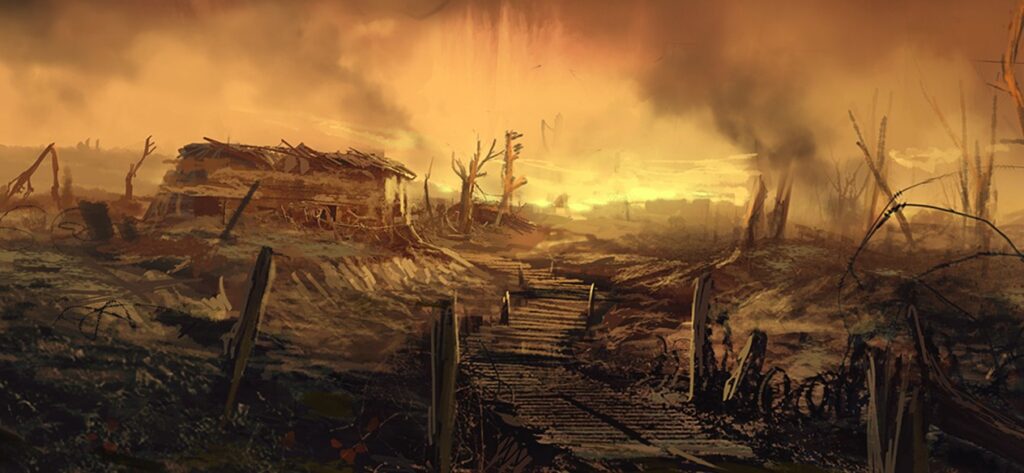
The Collapse of Neutrality: No Man’s Land
“Where death exists, neutrality often becomes just another form of silence.”
The film begins with fog. A thick fog that blurs vision, confuses direction, dissolves certainty. But this fog does not belong only to nature. From its very first scene, No Man’s Land makes us feel that war creates not only physical destruction, but a profound mental disorientation. It is not merely roads that are lost; identities, borders, and reality itself begin to collapse into one another.
Danis Tanović does not portray the Bosnian War through grand battle sequences. The camera remains confined most of the time: a trench caught between two lines, a handful of soldiers, an impossible escape route. Yet within this narrow space, the entire structure of war becomes visible. Because the real issue here is not the battlefield itself, but the way one human being becomes estranged from another.
That is why the film’s “no man’s land” is not simply a military zone. It is also a moral void. Trapped between two sides, this territory exists neither outside the war nor beyond it; it sits at the very center. It is not safe. It is merely abandoned.
When the Bosnian and Serbian soldiers find themselves stranded in the same trench, their tension initially appears political. Who started the war? Who is right? Who is the victim? But as their conversations unfold, another truth quietly emerges: they are not strangers to each other’s lives. They know the same songs, recognize the same streets, come from the same shared past. The war does not create two fundamentally different people; it exposes the fragmentation of a common life.
Identity therefore ceases to be something that creates belonging. Instead, it hardens into a border that separates people from one another. Uniforms, languages, and flags gradually overshadow the human being beneath them. What determines who lives and who dies is no longer character, but allegiance.
Tanović’s sharpest criticism, however, is directed less at the war itself than at the structures managing it from a distance. Throughout the film, the United Nations is constantly in motion, yet incapable of truly touching anything. Orders arrive too late, decisions are postponed, responsibility endlessly transferred elsewhere. In this way, the idea of “neutrality” stops being a principle that preserves peace and becomes a moral escape route.
And so the film asks an unsettling question:
Is true neutrality possible when human life is at stake?
Because in No Man’s Land, neutrality does not mean standing outside the war. More often, it simply means watching.
The media becomes another face of that spectatorship. The moment cameras arrive, the war suddenly becomes visible. Yet visibility changes nothing. While suffering continues, images circulate; death turns into part of a live broadcast. The urgency of reporters and the helplessness of soldiers become trapped within the same frame. War is no longer only a catastrophe being lived through, but also an image being consumed.
What makes the film especially striking is that it builds all of these political criticisms not through grand slogans, but through black comedy. Absurd conversations, meaningless waiting, endless bureaucratic delays… Rather than dramatizing the absurdity of war, Tanović simply reveals it. Here, tragedy and humor cannot be separated. That peculiar feeling so often found in Balkan cinema resurfaces once again: even in the middle of catastrophe, the rhythm of life never disappears entirely.
As the film approaches its finale, it grows quieter. Rescue attempts fail, bodies weaken, voices fade. What remains is a single man waiting. Motionless atop a landmine, staring into the sky.
This image is not merely the fate of one soldier. In that final frame, Tanović condenses the entire Balkan landscape into a single haunting image: trapped, abandoned, and watched by the world.
And when the film ends, what lingers is not triumph, but an unbearable silence. Because No Man’s Land does not present war as something concluded and left behind. On the contrary, it exposes one of the modern world’s deepest contradictions:
Sometimes the world does not remain silent while people are dying.
It remains silent while they die.
Tarafsızlığın Çöküşü: No Man’s Land
“Ölümün olduğu yerde tarafsızlık, çoğu zaman sadece başka bir sessizlik biçimidir.”
Sisle başlar film. Görüşü azaltan, yönleri birbirine karıştıran yoğun bir sis… Ama bu sis yalnızca doğaya ait değildir. No Man’s Land, daha ilk sahnesinden itibaren savaşın fiziksel değil zihinsel bir belirsizlik yarattığını hissettirir. İnsanlar yollarını kaybetmez sadece; kimlikler, sınırlar ve gerçeklik de birbirine karışır.
Danis Tanović’in filmi, Bosna Savaşı’nı büyük çatışma sahneleriyle anlatmaz. Kamera çoğu zaman dar bir alanın içinde kalır: iki hat arasındaki bir siper, birkaç asker, ulaşılamayan bir çıkış yolu… Ancak tam da bu dar alanın içinde savaşın bütün yapısı görünür hâle gelir. Çünkü burada mesele cephe değil, insanın başka bir insana nasıl yabancılaştığıdır.
Filmin merkezindeki “tarafsız bölge” kavramı bu yüzden yalnızca askeri bir alan değildir. Aynı zamanda ahlaki bir boşluğu temsil eder. İki tarafın arasında kalan bu bölge, savaşın dışında değil tam ortasındadır. Güvenli değildir; sadece sahipsizdir.
Bosnalı ve Sırp asker aynı siperde sıkışıp kaldıklarında aralarındaki gerilim ilk bakışta politik görünür. Kim savaşı başlattı? Kim haklı? Kim mağdur? Ancak konuşmalar ilerledikçe fark edilir ki aslında birbirlerinin hayatlarına yabancı değildirler. Aynı müzikleri bilirler, aynı sokakları tanırlar, aynı geçmişin içinden gelirler. Savaş burada iki farklı insan üretmez; ortak bir hayatın parçalanmasını görünür kılar.
Bu yüzden filmde kimlik, aidiyet üreten bir şey olmaktan çıkar. Tam tersine, insanları birbirinden ayıran sert bir sınıra dönüşür. Üniformalar, diller ve bayraklar giderek insanın önüne geçer. Kimin yaşayıp kimin öleceğini belirleyen şey artık karakter değil, ait olunan taraftır.
Tanović’in en güçlü eleştirisi ise savaşın kendisinden çok, savaşı uzaktan yöneten yapılara yönelir. Birleşmiş Milletler film boyunca sürekli hareket hâlindedir ama neredeyse hiçbir şeye gerçekten dokunamaz. Emirler gecikir, kararlar ertelenir, sorumluluk sürekli başka bir yere aktarılır. Böylece “tarafsızlık” fikri, barışı koruyan bir ilke olmaktan çıkar; ahlaki bir kaçış biçimine dönüşür.
Film burada rahatsız edici bir soru sorar:
İnsan hayatı söz konusuyken gerçekten tarafsız kalmak mümkün müdür?
Çünkü No Man’s Land’de tarafsızlık, savaşın dışında durmak anlamına gelmez. Çoğu zaman yalnızca seyretmek anlamına gelir.
Medya ise bu seyir hâlinin başka bir yüzüdür. Kameralar olay yerine ulaştığında savaş bir anda görünür olur. Ancak görünürlük, gerçeği değiştirmez. Acı devam ederken görüntü dolaşıma girer; ölüm, canlı yayının bir parçasına dönüşür. Muhabirlerin telaşıyla askerlerin çaresizliği aynı kadrajın içine sıkışır. Böylece savaş yalnızca yaşanan bir felaket değil, aynı zamanda tüketilen bir görüntü hâline gelir.
Filmin en çarpıcı yanı, bütün bu politik eleştiriyi büyük sloganlarla değil, kara mizahın içinden kurmasıdır. Absürt diyaloglar, anlamsız bekleyişler ve bitmeyen bürokratik gecikmeler… Tanović savaşın saçmalığını dramatize etmek yerine görünür kılar. Çünkü burada trajedi ile mizah birbirinden ayrılmaz. Balkan coğrafyasının sinemasında sıkça hissedilen o tuhaf duygu yeniden ortaya çıkar: felaketin ortasında bile yaşamın ritmi tamamen kaybolmaz.
Finale doğru film daha da sessizleşir. Kurtarma girişimleri başarısız olur, bedenler yorulur, sesler azalır. Geriye yalnızca bekleyen bir insan kalır. Mayının üzerinde, hareketsiz biçimde gökyüzüne bakan bir beden…
Bu görüntü yalnızca bir askerin kaderi değildir. Tanović burada bütün Balkan coğrafyasını tek bir kadraja sıkıştırır: sıkışmış, terk edilmiş ve herkes tarafından izlenen bir coğrafya.
Ve film sona erdiğinde geriye zafer değil, rahatsız edici bir sessizlik kalır. Çünkü No Man’s Land, savaşı bitmiş bir olay gibi anlatmaz. Tam tersine, modern dünyanın en büyük çelişkilerinden birini açığa çıkarır:
Bazen insanlar ölmezken dünya sessiz kalmaz.
İnsanlar ölürken sessiz kalır.