
Colors That Blink
“Life was beautiful because there were dreams, there were fantasies… Because there was cinema.”
On the very first page of my memories, there is an old black-and-white photograph, yellowed with age and curled at the edges. The early eighties… I cannot quite remember the exact year, but every time I look at it, I still feel the quiet sorrow of that little child inside me.
I am sitting on my father’s right shoulder, staring angrily into the camera with furrowed brows. My short blond hair is scattered wildly by the wind. My sibling, meanwhile, rests their head gently against my father’s left shoulder, surrendering to that warmth, smiling in defiance of my anger.
In that photograph, life had withheld its colors from us. The leaden coldness of the era, the gloom of the streets, and the absence of even a simple decorative hairpin were the purest heartbreaks of my childhood.
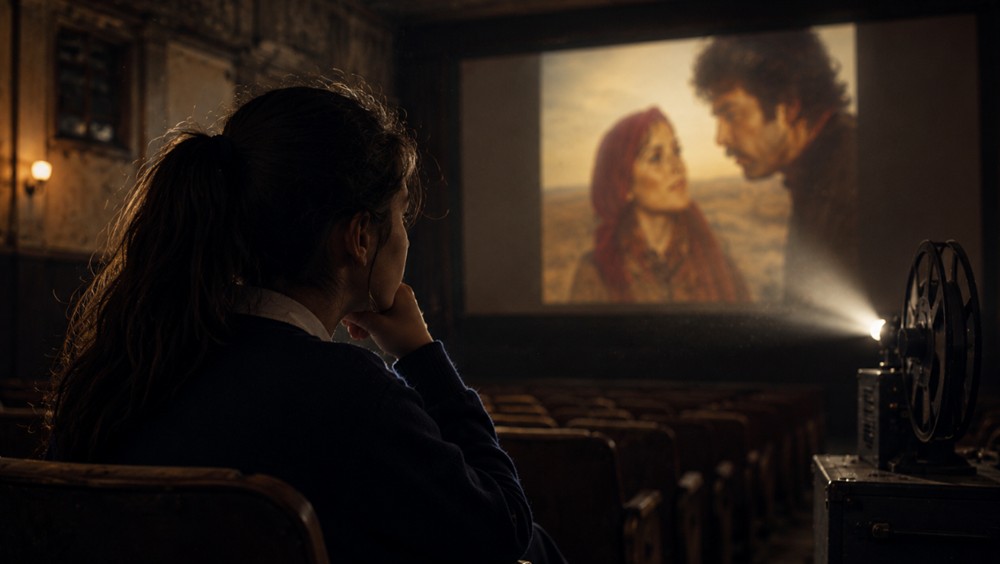
Don’t ask me how I escaped that black-and-white frame, how I managed to step out of that frozen time. But one day, toward the end of the eighties, I narrowed my eyes with that same stubborn gaze and found, not a gray world before me, but a giant cinema screen. I had fled the cold walls of school and taken refuge in Göztepe’s dim little neighborhood theater that smelled of old wood and dust.
On the screen was Selvi Boylum Al Yazmalım. The way Asya looked at İlyas carried astonishment, admiration, and love all at once, spilling out of the screen and into the darkness of the theater itself.
As I watched, something inside me began to warm. My childhood filled with color like paint spilling from a brush. The sweet thrill of skipping school blended with the ache of adolescence just beginning to awaken inside my heart. Butterflies fluttered wildly in my stomach.
And beneath that magical light reflecting onto my face, those old stubborn expressions slowly melted away, replaced by a soft and innocent smile.
Asya’s elegance, İlyas’s reckless passion… A pure sense of wonder rose inside me. This beautiful film had been made during those colorless years of my childhood. If such colors and such love had always existed in the world, why had I remained trapped inside that black-and-white photograph?
That day, sitting in that worn wooden seat, I understood something: cinema would become my only refuge in life — my first and last love.
Though as a child, I could never fully understand why Asya chose devotion over passion at the end of the film. Quietly, I resented it.
“How cruel the world of adults can be,” I remember thinking.
“Couldn’t passion have been given one more chance?”
From that day on, the little neighborhood cinema in Göztepe became my home, my confidant. During another escape from school, I found myself inside yet another story starring Türkan Şoray and Kadir İnanır. This time, the love was even more impossible, even more tragic. The title Dila Hanım slowly appeared on the screen.
Kadir İnanır’s imposing yet sorrowful figure… the graceful way he lifted his hand first toward the earth, then to his heart, and finally toward the sky… And those deep zeybek rhythms echoing through the theater… My heart felt too large for my chest, as though my breath itself trembled at the edge of my lips. How could anyone forget such a feeling? How could it ever be denied?
I was so mesmerized that I handed the last few coins in my pocket to the old projectionist and bought the film poster. I ran back to the dormitory and pinned it carefully beside my bunk.
During the day, I hid it quickly whenever the supervisor passed by. At night, after everyone had fallen asleep, I would take it out again and hang it gently from the iron frame of my bed.
After nine o’clock, when the lights went out, my colorful and dreamlike world would begin.
Life was beautiful because behind the darkness there were dreams, fantasies, and love.
Those were the years when the harsh reality of life intertwined with the healing fairytale of cinema and quietly repaired something inside me.
In the dim silence of the dormitory at midnight, I would lock eyes with the gaze in that poster hanging from my bunk. I never looked away from those shimmering eyes in the dark — just like the stubborn child in that old black-and-white photograph who stared defiantly into the camera.
And from that moment on, I never looked away from life again; neither from the cinema screen, nor from the lead-colored reality of the world itself.
The courage to keep my eyes open in the darkness of that dormitory transformed me into a storyteller. One day, I would recreate those colorful dreams for others. I would tell people what I had seen through my own window onto the world. I would become a screenwriter, whispering my dreams scene by scene onto blank white pages.
Göz Kırpan Renkler
“Hayat güzeldi çünkü rüyalar vardı, hayaller vardı… Çünkü sinema vardı.”
Anılarımın ilk sayfasında sararmış, kenarları kıvrılmış siyah beyaz bir fotoğraf durur. Seksenlerin hemen başı… Tam yılını çocuk aklım pek seçemez ama ne zaman baksam o küçük çocuğun kırgınlığını hissederim içimde. Babamın sağ omzunda oturmuş, dünyaya kaşlarımı çatarak, öfkeyle bakıyorum objektife. Sarı, kısa saçlarım rüzgarda darmadağın… Kardeşim ise babamın sol omzuna şefkatle yaslamış başını; o sıcaklığa teslim olmuş, bana inat gülümsüyor.
O fotoğrafta hayat, renklerini esirgemiş bizden. Dönemin o kurşuni soğukluğu, sokağın kasveti ve saçlarıma takacak bir çift süslü tel tokanın yokluğu, çocuk kalbimin en masum mutsuzluklarıydı işte…
O siyah beyaz karenin içinden nasıl çıktım, o donmuş zamandan nasıl kurtuldum, sormayın. Ama seksenlerin sonuna doğru bir gün, yine aynı inatçı bakışlarımla gözlerimi kıstığımda, bu kez karşımda gri bir dünya değil, koca bir sinema perdesi vardı. Okulun o soğuk duvarlarından kaçıp Göztepe’nin loş, ahşap kokulu mahalle sinemasına sığınmıştım.
Perdede Selvi Boylum Al Yazmalım oynuyordu. Asya, İlyas’a öyle bir bakıyordu ki; şaşkınlık, hayranlık ve aşk, perdeden taşıp salonun o karanlık boşluğuna dökülüyordu. İzledikçe içim ısındı, çocukluğum fırçadan dökülen boyalar gibi renklendi. Okuldan kaçmanın o tatlı telaşı, kalbime yeni uyanan ilk gençlik sızısıyla karıştı. Karnımda bir sürü kelebek, kanat çırpıp duruyordu.
Yüzüme akseden o büyülü ışıkla beraber, o eski, inatçı mimiklerim eridi; yerini naif, yumuşacık bir tebessüme bıraktı.
Asya’nın zarafeti, İlyas’ın o deli dolu sevdası… İçimden saf bir hayret yükseldi: Bu güzel film ben çocukken, o renksiz günlerin ortasında çekilmişti. Madem dünyada böylesi renkler, böylesi sevdalar vardı; ben neden o siyah beyaz fotoğrafın içine hapsolup kalmıştım?
O gün, o tahta koltukta anladım; benim bu hayattaki tek sığınağım, ilk ve son aşkım sinema olacaktı.
Gerçi filmin sonunda Asya’nın o büyük tutkuyu bırakıp emeği seçmesini çocuk kalbimle pek anlayamamış, içten içe içerlemiştim.
“Büyüklerin dünyası ne kadar da katı,” diye geçirmiştim içimden, “Tutkuya bir şans daha verilemez miydi?”
O günden sonra Göztepe’deki o mahalle sineması benim evim, sırdaşım oldu. Yine bir okul kaçamağında, bu kez bir başka Türkan Şoray ve Kadir İnanır hikayesine denk geldim. Bu defaki aşk daha da imkansız, daha da hüzünlüydü. Dila Hanım yazısı ekranda hafifçe belirmişti.
Kadir İnanır’ın o heybetli ama mahzun duruşuyla elini önce toprağa, sonra kalbine ve gökyüzüne doğru zarifçe kaldırışı… Ve derinden gelen o zeybek ritimleri… Kalbim göğüs kafesime sığmıyor, sanki soluğum ağzımda atıyordu. Bunu unutmak, bu hissi yok saymak mümkün müydü?
O kadar büyülenmiştim ki, cebimde kalan son birkaç kuruşu sinemacı amcaya uzatıp filmin afişini satın aldım. Koşarak yatakhaneye döndüm ve onu ranzamın başucuna, duvara iliştirdim.
Gündüzleri belletmen öğretmen odadan geçerken görmesin diye alelacele saklar, geceleri herkes uyuyunca sakladığım yerden çıkarıp ranzamın demirlerine usulca asardım.
Akşam dokuzdan sonra lambalar sönünce, benim o renkli, masalsı dünyam başlardı.
Hayat güzeldi çünkü karanlığın arkasında rüyalar vardı, hayaller vardı, aşk vardı…
O yıllar, hayatın o katı gerçeği ile sinemanın şifalı masalının ruhumda iç içe geçtiği, beni iyileştirdiği o güzel yıllardı.
Gece yarısı yatakhanenin loşluğunda, o ranzanın demirlerine asılı afişteki gözlerle göz göze gelirdim. Karanlıkta parıldayan o bakışlardan gözlerimi hiç kaçırmazdım; tıpkı o siyah-beyaz çocukluk fotoğrafında objektife öfkeyle ama inatla bakan çocuk gibi.
O andan sonra da gözümü hiç ayırmadım hayattan; ne sinema perdesinden, ne de dünyanın kurşuni gerçeğinden.
Gözlerimi kırpmadan bakma cesareti, yatakhanenin o sessiz karanlığında beni bir hikaye anlatıcısına dönüştürdü. Karşımda duran o afişteki renkli rüyaları başkaları için yeniden kuracak, insanlara kendi penceremden gördüklerimi anlatacaktım. Önümdeki beyaz sayfalara hayallerimi sahne sahne fısıldayan bir senaryo yazarı olacaktım.