
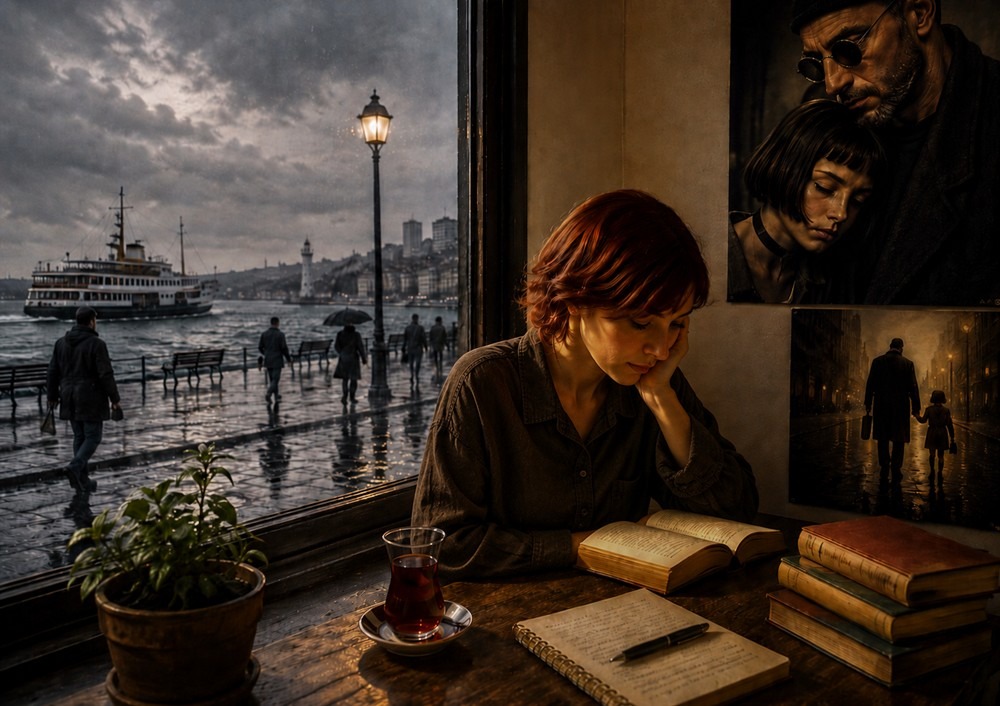
90’s, İzmir and the Rain Within Me
Mathilda: “Is life always this hard, or is it just when you’re a kid?”
Léon: “Always.”
The year I graduated from high school, when the university entrance exam results were announced and I realized I hadn’t been accepted into the program I wanted, I felt like a complete disappointment.
When I stood before my father and told him my decision, I tried hard to keep my voice from trembling.
“I’m going to prepare for another year.”
The truth is, that decision was nothing more than a refuge I had created for myself. After the suffocating atmosphere of boarding school, the thought of spending an entire year freely in İzmir felt almost like a dream.
Without wasting any time, I enrolled at Batı Dershanesi in Çankaya. The tutoring center was just above Sevgi Yolu and only a short run away from Karaca Cinema. Whenever I felt overwhelmed, I would walk toward Pasaport Pier, turning my face into the wind and gazing out at a view I could never get enough of.
Back then, Kordon had not yet been buried beneath concrete. It was far removed from what it looks like today; it possessed an entirely different spirit. In the modest seaside coffeehouses, people of all ages gathered and shared life together.
Those places became especially magical on rainy and foggy İzmir afternoons. The murmur of conversations inside blended with the familiar clinking of teaspoons against tea glasses and the distant horns of ferries drifting in from the harbor.
Liman Kahvehanesi was our favorite refuge.
Sitting there and watching the sea stirred something strange inside me—a feeling that was melancholy, yet somehow deeply comforting.
At the time, I was living with a profound contradiction. On one side was the relief and freedom that came with finishing high school; on the other was the relentless social expectation that insisted:
“You must get into a university.”
The bitter truth was that there wasn’t a single place in that field where I genuinely wanted to study. If I’m being honest, winning that exam was psychologically impossible for the person I was then. I knew I would fail. I was simply staying in the game to buy myself more time.
Books and Escape Routes
During those days at Liman Kahvehanesi, I read books with an intensity that disconnected me from the world. Sometimes I became so immersed that I nearly forgot to breathe.
Those pages were the only thing that kept me standing through the miserable, soul-crushing years of middle school and high school.
There were moments when I would quietly whisper to my books, thanking them for pulling me back from darkness, for rescuing me from the edge of despair.
Not this time, I would think. I had survived again.
Back then, I spent countless hours in conversation with Sarah Woodruff, the unforgettable heroine of John Fowles’s The French Lieutenant’s Woman. As I turned each page, the same question echoed through my mind:
Must a woman live the story society has written for her, or can she write her own?
One afternoon, during another one of those suffocating days, rain poured relentlessly from the sky.
I wandered the streets aimlessly until a movie poster caught my eye.
Jean Reno stared back at me from the poster—strikingly handsome, mysterious, impossible to ignore.
The advertisement itself was puzzling. Was it a love story? An action film? I couldn’t tell at first glance. Yet behind those dark, penetrating eyes lay a loneliness that felt strangely familiar, much like the melancholy I carried within me in İzmir.
Seeking shelter from the rain, I found myself at the ticket booth.
The moment I stepped into the comforting darkness of Karaca Cinema and the world on the screen began to unfold, something inside me settled into place.
One by one, the loose pieces within me found where they belonged.
As the film progressed, I felt as though I were Léon himself—the man who escaped a cold and merciless world by sinking into a movie seat and watching a brighter one with a childlike smile.
The sense of rootlessness I felt while walking through the crowds at Pasaport Pier and along Kordon suddenly made sense.
I was like that lonely man wandering through New York with his potted plant—his most loyal companion—unable to put down roots because there was no soil in which to grow.
The crowds of İzmir were my invisibility.
In that moment, I realized that one scene would remain with me forever: Mathilda escaping the darkness of her apartment building, standing in a doorway, staring beyond the cigarette smoke toward something that looked like salvation.
I, too, felt as though I were standing on the threshold of my own life, waiting for a door to open and pull me out of the suffocating place where I stood.
Was life always this hard, or did it only seem that way now?
When I heard those words spoken by Mathilda, the question began echoing inside me alongside all the uncertainty the future carried.In that trap whose rules had been written by others, I found myself sharing the same desperate determination that drove Mathilda to flee her dangerous home and seek refuge in Léon’s strange yet compassionate world—a world without rules, yet somehow governed by its own quiet discipline.
I no longer believed in the future that institutions and systems promised. I was simply searching for a hidden room where I could be myself.
Even my books had begun to take on a new meaning.
Just as Léon returned to his small apartment after every difficult assignment and carefully wiped the leaves of his potted plant, giving it water and attention, books became the place I returned to after every battle life demanded of me.
The words Léon spoke about that plant captured perfectly what literature meant to me:
“It’s my best friend. Always happy. No questions. And it’s just like me… no roots.”
Sarah Woodruff, with whom I had shared so many silent conversations in Fowles’s novel, now stood beside Mathilda in my imagination.
One lived in Victorian England, the other in the suburbs of New York. Yet both had rejected the role of victim assigned to them and chosen, at a very young age, to write their own stories.
They were two solitary souls who had dared to grow up before their time.
As the end credits rolled, the acoustic guitar of Sting’s Shape of My Heart sealed my melancholy completely.
The song was not about winning cards. It was about searching for the mysterious logic behind the game itself—the rhythm hidden beneath life.
Much like the way I approached the university entrance exam during those years. I was not studying in order to win. I was studying to buy myself time, to play my own hand against life as wisely as I could.
As Sting’s mournful voice whispered through the darkness, I remained motionless in my seat at Karaca Cinema.
When the screen finally faded to black, one image lingered in my mind.
Mathilda planting Léon’s potted plant in the schoolyard.
Giving it soil.
Giving it roots.
Giving it a place to belong.
And then saying:
“I think we’ll be okay here, Léon. We’ll be safe here.”
When I returned to Liman Kahvehanesi and wrapped my hands around a warm glass of tea, the gray skies of İzmir no longer felt quite so unfamiliar.
In my mind lingered the dim hotel room where Léon and Mathilda hid from the world, the quiet tenderness of Mathilda saying, “I love you, Léon,” and the peaceful intimacy of sharing a simple glass of milk together.
And still, that melancholy melody continued to echo in my ears.
The poster I had noticed in the rain—and the mysterious film hidden behind it—had finally offered an answer to the endless storm inside me.
It lifted me from the sidewalk where I had been standing and carried me somewhere else entirely.
To a refuge where I could make peace with my own loneliness.
To a place where I could finally put down roots in the arms of İzmir, just like that little plant.
And perhaps, for the first time, stop running from the rain within me.
90’lar, İzmir ve İçimdeki Yağmur
Mathilda: “Is life always this hard, or is it just when you’re a kid?”
(Hayat her zaman mı bu kadar zor, yoksa sadece çocukken mi?)Léon: “Always.”
(Her zaman.)
Liseyi bitirdiğim o yıl, üniversite sınavı sonuçları açıklanıp istediğim bölümü kazanamadığımda tam bir hayal kırıklığıydım. Kararımı verip babamın karşısına geçtiğimde sesimin titrememesine gayret ettim:
“Bir yıl daha hazırlanacağım.”
Aslında bu karar, tamamen kendime yarattığım bir kaçış alanıydı. Yatılı lisenin o insanı nefessiz bırakan, boğucu havasından sonra bir yıl boyunca İzmir’de özgür kalabilme fikri bana adeta rüya gibi geliyordu.
Vakit kaybetmeden Çankaya’daki Batı Dershanesi’ne kaydoldum. Dershane, Sevgi Yolu’nun hemen üst tarafındaydı; Karaca Sineması’na ise şöyle bir koşu mesafesindeydi. Ne zaman bunalsam, yüzümü rüzgâra doğru çevirip bakmaya doyamadığım Pasaport İskelesi’ne doğru yürürdüm.
O yıllarda Kordon henüz betonlaşmamıştı; bugünkü görüntüsünden çok uzakta, bambaşka bir ruhu vardı. Denize yakın o salaş kahvehanelerde her yaştan insan oturur, hayatı bölüşürdü.
Özellikle yağmurlu ve sisli İzmir günlerinde o kahvehanelerin tadı bir başka olurdu. İçerideki koyu sohbet sesleri, çay bardağına vuran çay kaşıklarının o bildik tıkırtısı ve dışarıdan gelen vapur düdükleri birbirine karışırdı. Liman Kahvehanesi bizim en favori sığınağımızdı. Orada oturup denizi izlemek, içimde tuhaf, melankolik ama bir o kadar da zevk veren bir his uyandırırdı.
O günlerde içten içe büyük bir çelişki yaşıyordum. Bir yanda liseyi bitirmenin getirdiği o hafiflik ve ferahlık, diğer yanda “mutlaka bir üniversite kazanmalısın” diyen o toplumsal zorunluluk…
İşin acı tarafı, girdiğim bu alanda okumak istediğim tek bir yer bile yoktu. Yani dürüst olmak gerekirse, o günkü ben için bu sınavı kazanmak psikolojik olarak mümkün değildi. Kaybedeceğimi bile bile, sadece zaman kazanmak için oyunu devam ettiriyordum.
Kitaplar ve Kaçış Rotaları
Liman Kahvehanesi’nde oturduğum o günlerde dünyadan koparcasına, neredeyse nefes almayı unutarak kitap okurdum. Ortaokul ve lisenin o mutsuz, ruhu öldüren atmosferinde beni ayakta tutan yegâne şey o sayfalardı.
Öyle ki bazen durup dururken kitaplarıma fısıldar, beni adeta intihar etmenin eşiğinden, o karanlıktan çekip aldıkları için onlara teşekkür ederdim.
Oh be, bu sefer de kurtulmuştum.
O dönem John Fowles’ın Fransız Teğmenin Kadını romanındaki o güçlü kadın karakteri Sarah Woodruff ile az dertleşmemiştik. Sayfaları çevirirken hep aynı soru kafamda yankılanırdı:
Sahi, bir kadın ona toplum tarafından dayatılan hikâyeyi yaşamak zorunda mıdır, yoksa kendi hikâyesini kendisi yazabilir mi?
İşte yine öyle buhranlı, içimin daraldığı günlerden biriydi. Dışarıda sicim gibi bir yağmur yağıyordu. Sokakta umutsuzca yürürken gözüme bir sinema afişi ilişti.
Afişte Jean Reno’nun o aşırı yakışıklı, gizemli hâli duruyordu.
Afiş biraz tuhaftı; bir aşk filmi miydi, yoksa bir aksiyon filmi mi, ilk bakışta anlayamadım. O karanlık ve derin bakışların ardında, tıpkı bendeki o İzmir melankolisi gibi büyük bir yalnızlık gizliydi.
Yağmurdan kaçıp o bilet gişesine yöneldiğimde, Karaca Sineması’nın o şefkatli karanlığına adım attığımda ve perdede o dünya dönmeye başladığında, içimdeki taşlar birer birer yerine oturdu.
Kendimi o soğuk ve acımasız dünyasından sıyrılıp bir sinema koltuğuna gömülen, perdedeki neşeli dünyaya çocuksu bir tebessümle bakan Léon’un ta kendisi gibi hissettim.
Film ilerledikçe Pasaport İskelesi’nde, Kordon boyunda o kalabalığın içinde yürürken hissettiğim o köksüzlük anlam kazandı; ben de kollarının arasında en sadık dostu olan, toprağı olmadığı için büyüyemeyen saksı çiçeğiyle New York sokaklarında yapayalnız yürüyen o adam gibiydim.
İzmir’in kalabalığı benim görünmezliğimdi…
O an anladım ki zihnimde hep Mathilda’nın evinin o kasvetli koridorundan kaçıp kapı eşiğine sığındığı, sigara dumanının arkasından uzağa, kurtuluşa baktığı o ilk an dönecekti artık.
Ben de kendi hayatımın eşiğinde durmuş, beni bu boğuculuktan çekip alacak bir kapının açılmasını bekliyordum.
Hayat hep böyle zor muydu, yoksa sadece şimdi mi bana öyle geliyordu?
Sözlerini Mathilda’dan duyduğumda içimde geleceğin o ağır belirsizliğiyle birlikte bu soru yankılanmaya başladı.
Kuralları başkaları tarafından yazılmış bu toplumsal tuzakta, tıpkı Mathilda’nın o tekinsiz aile evinden kaçıp Léon’un kuralsız ama kendi içinde şefkatli ve disiplinli dünyasına sığınmasındaki çaresiz kararlılığı yaşıyordum.
Sistemlerin vadettiği gelecek masallarına inanmıyor, sadece kendim olabileceğim gizli bir oda arıyordum.
Kitaplarım bile yeni bir anlam kazanmıştı gözümde; tıpkı Léon’un her zorlu görevden sonra o tek kişilik odasına dönüp saksıdaki çiçeğinin yapraklarını şefkatle silmesi, ona can suyu vermesi gibi, kitaplar da benim hayata karşı verdiğim savaştan sonra döndüğüm can bağlarımdı.
Léon’un o çiçek için söylediği söz benim edebiyata sığınışımın özetiydi:
“O benim en iyi dostum. Soru sormuyor ve bana benziyor; görüyorsun ya, kökleri yok.”
Fowles’ın romanında dertleştiğim Sarah Woodruff ile Mathilda gözümün önünde yan yana duruyordu artık.
Biri Viktorya dönemi İngiltere’sinde, diğeri New York banliyölerinde, kendisine biçilen kurban rolünü elinin tersiyle itmiş, kendi hikâyesini yazmak için erkenden büyümeyi göze almış iki yalnız ruh…
Filmin sonunda jenerik akarken Sting’in Shape of My Heart şarkısının o akustik gitar tınıları içimdeki melankoliyi tamamen mühürledi.
Şarkı, kartları kazanmak için değil; o oyunun arkasındaki gizemli mantığı, yani hayatın kendi ritmini bulmak için oynayan bir kumarbazı anlatıyordu.
Tıpkı benim o dönem üniversite sınavına, kazanmak için değil de sadece zaman kazanmak ve hayata karşı kendi kartlarımı doğru oynamak için inatla çalışmam gibi…
Sting’in o hüzünlü sesi “This is not my shape of my heart” diye fısıldarken Karaca Sineması’nın koltuğunda öylece kalakalmıştım.
Perde tamamen kapandığında zihnimde asılı kalan son şey, Mathilda’nın o saksıdaki çiçeği okulun bahçesindeki toprağa ektiği ve:
“Burada güvende olacağız Léon, buraya kök salacağız.”
dediği o son sahne oldu.
Liman Kahvehanesi’ne geri dönüp masadaki sıcak çay bardağını avuçlarımın arasına aldığımda, dışarıdaki gri İzmir gökyüzü bana artık daha tanıdıktı.
Zihnimde Léon ve Mathilda’nın dünyadan gizlendikleri o loş otel odası, Mathilda’nın “Seni seviyorum Léon” deyişi ve o bir bardak sütü paylaştıkları anın fırtınasız huzuru vardı.
Kulaklarımda hâlâ o hüzünlü Sting melodisi dönüyordu.
O afiş ve arkasındaki o gizemli film, içimdeki bitmek bilmeyen yağmura nihayet bir cevap vermişti; beni o an durduğum kaldırımdan alıp, kendi yalnızlığımla barışacağım ve İzmir’in kollarına tıpkı o çiçek gibi kök salacağım bambaşka bir sığınağa götürmüştü.